01
—
Productivity Planning
Momentum App
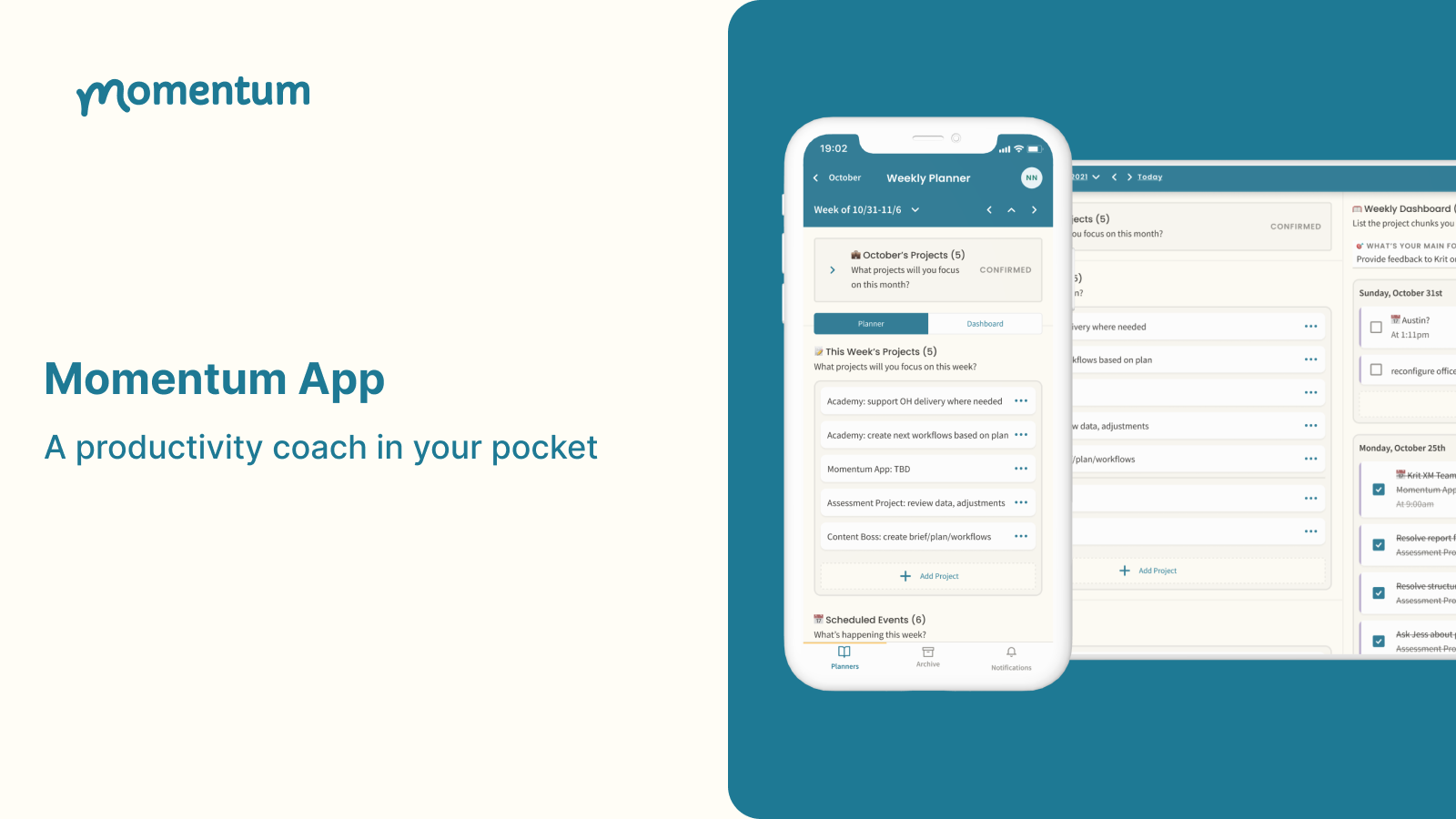
A productivity coach in your pocket — translating a paper planning system into a structured, adaptive web experience.
Overview
From paper ritual to connected planning.
The challenge was preserving the clarity and reflection of a paper planner while giving the web app memory, structure, and continuity.
The challenge
Users needed yearly, quarterly, monthly, weekly, and daily views without repeatedly rewriting the same goals at every level.
The direction
A parent/child interaction model where users review inherited goals, confirm what still matters, and create only what's specific to the current view.
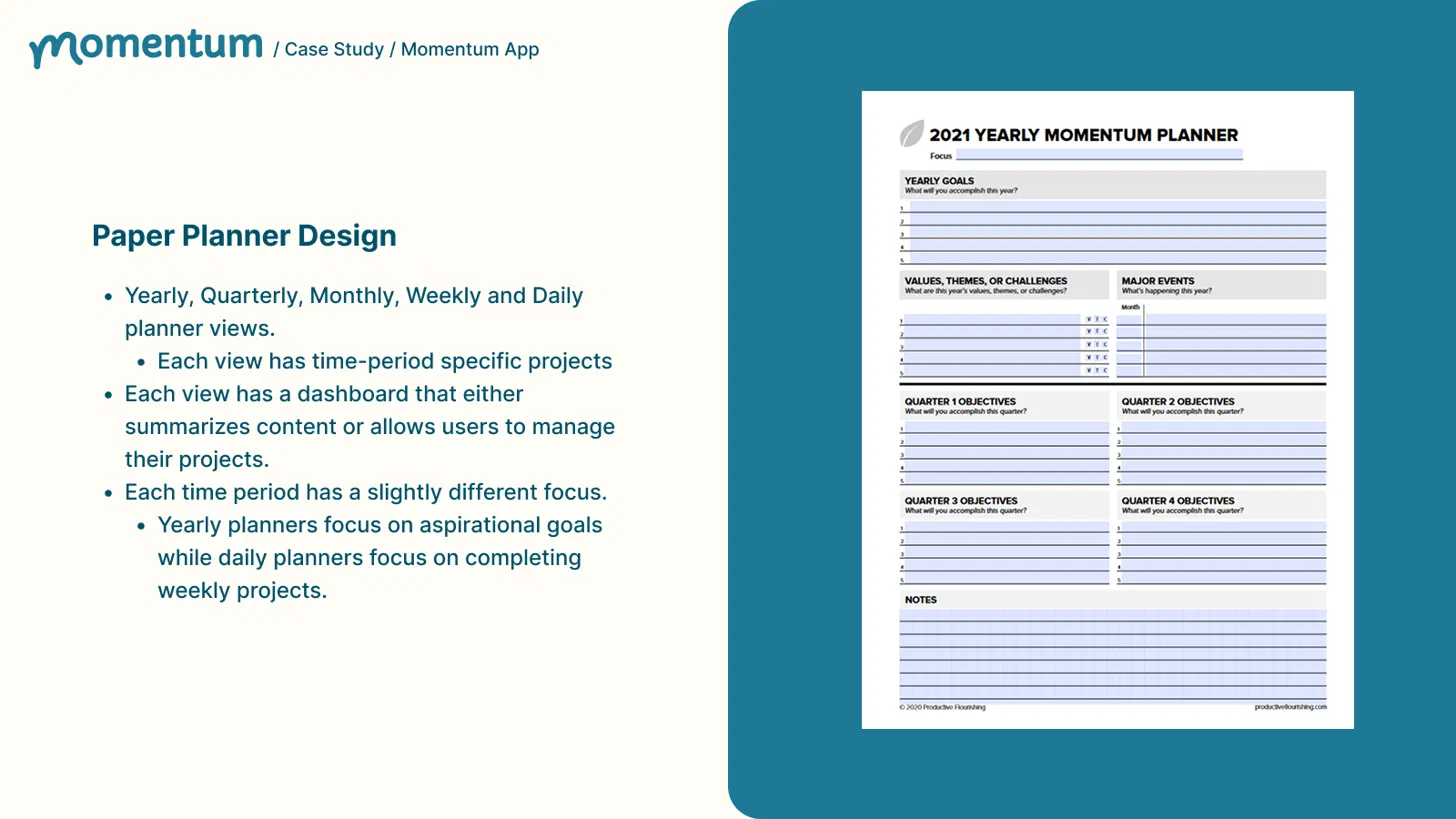
The original planning model established different levels of focus, from aspirational yearly goals down to daily execution.
The digital advantage wasn't replacing paper — it was helping the system remember, connect, and retrieve prior thinking.
Research
Two rounds of customer interviews.
Research focused on existing planning behavior, integration needs, and what a digital product had to preserve.
12
Customer interviews across two rounds.
4/6
Round-two participants planned on paper first.
6/6
Expected a price near $10 per month.
Individual creator
Uses sticky notes and to-do lists, struggles with conflicting priorities, and needs to communicate workload.
Manager or executive
Needs to understand a mix of urgent, strategic, and routine tasks before entering the day-to-day whirlwind.
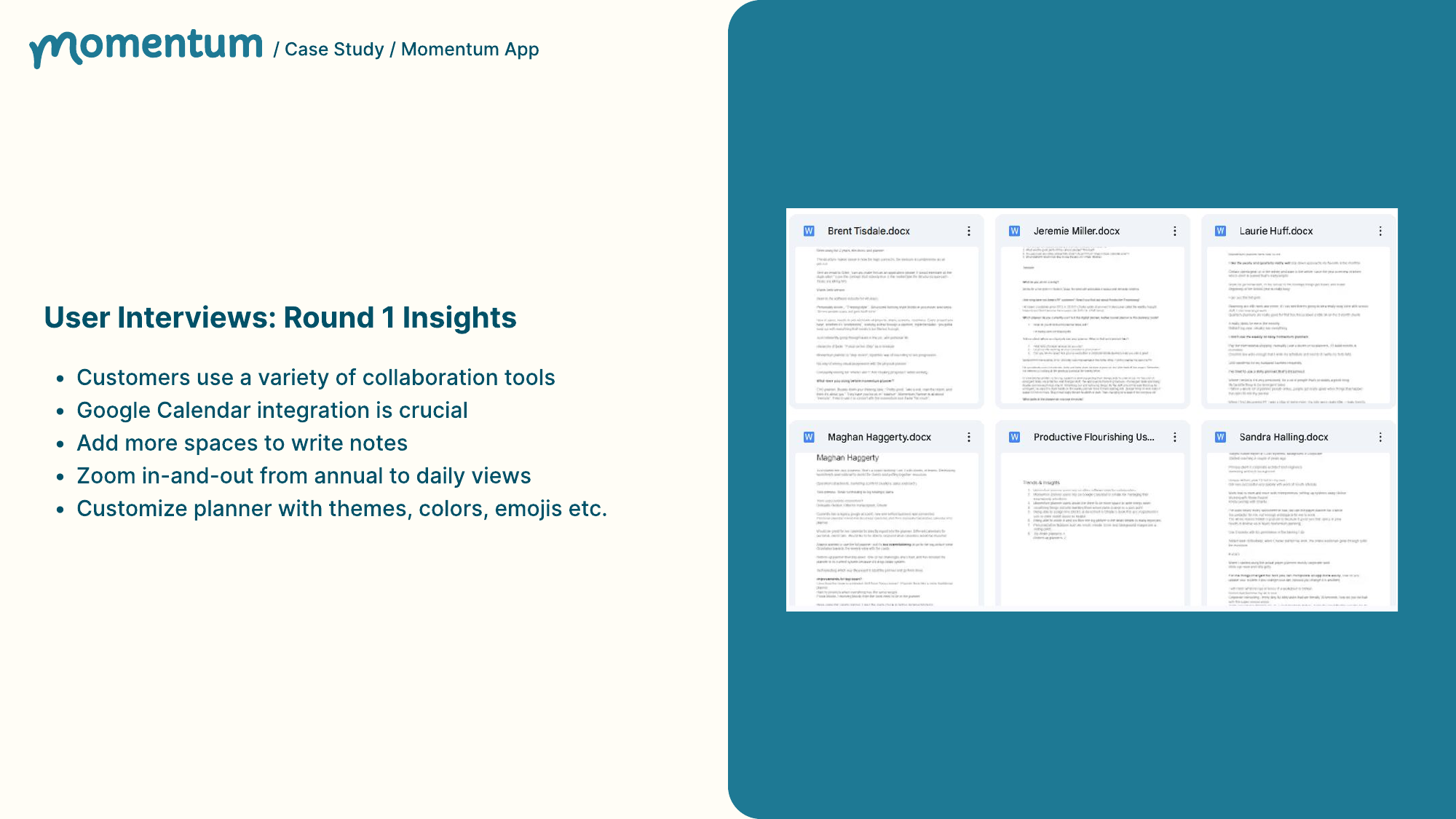
Interview themes included calendar integration, room for notes, zooming between time horizons, and personalization.
Interaction Design
Review, confirm, then refine.
Each planner level inherits context from its parent and links users to more detailed child views.
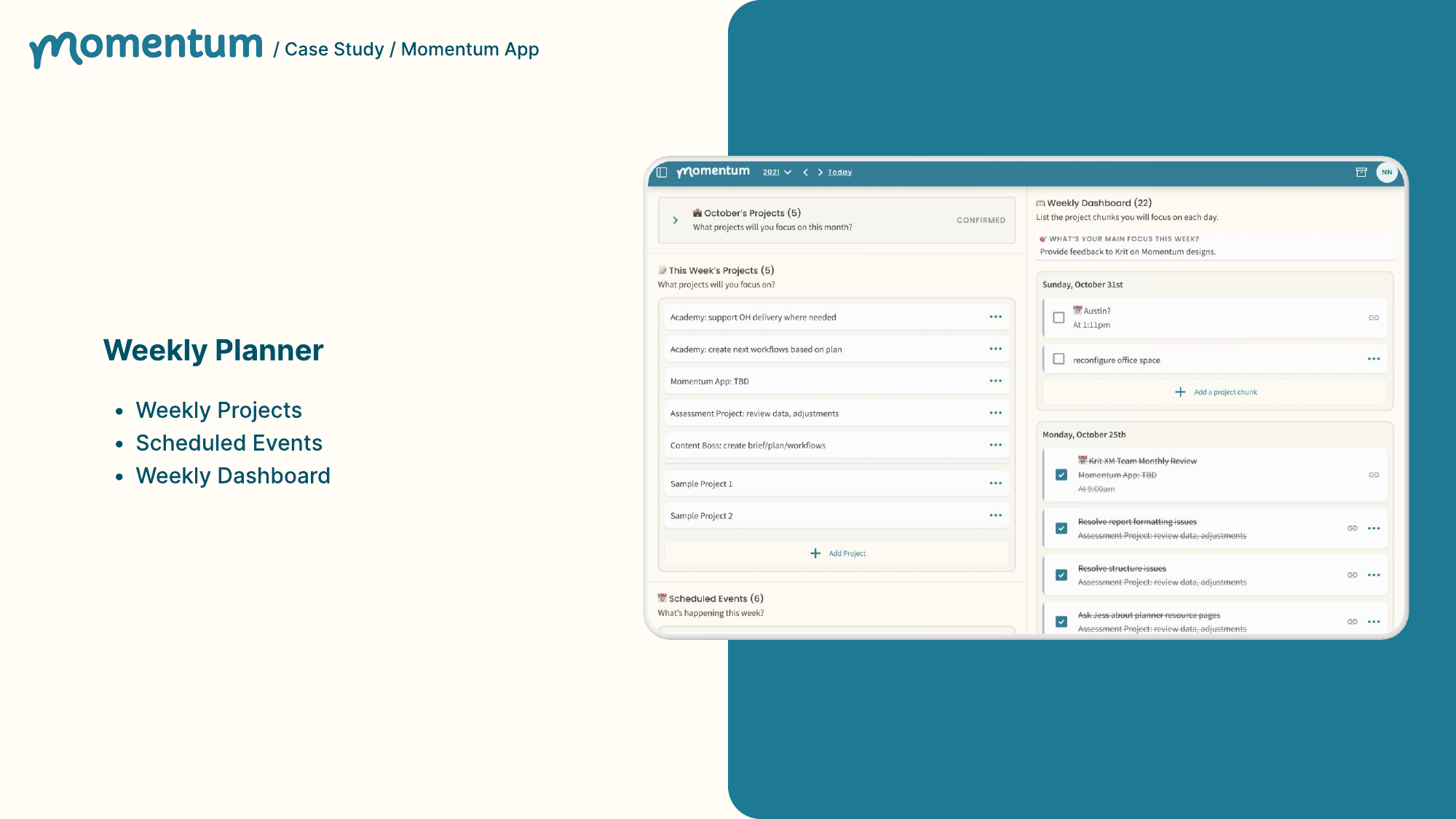
The weekly planner combines inherited projects, editable weekly priorities, scheduled events, and a dashboard view.
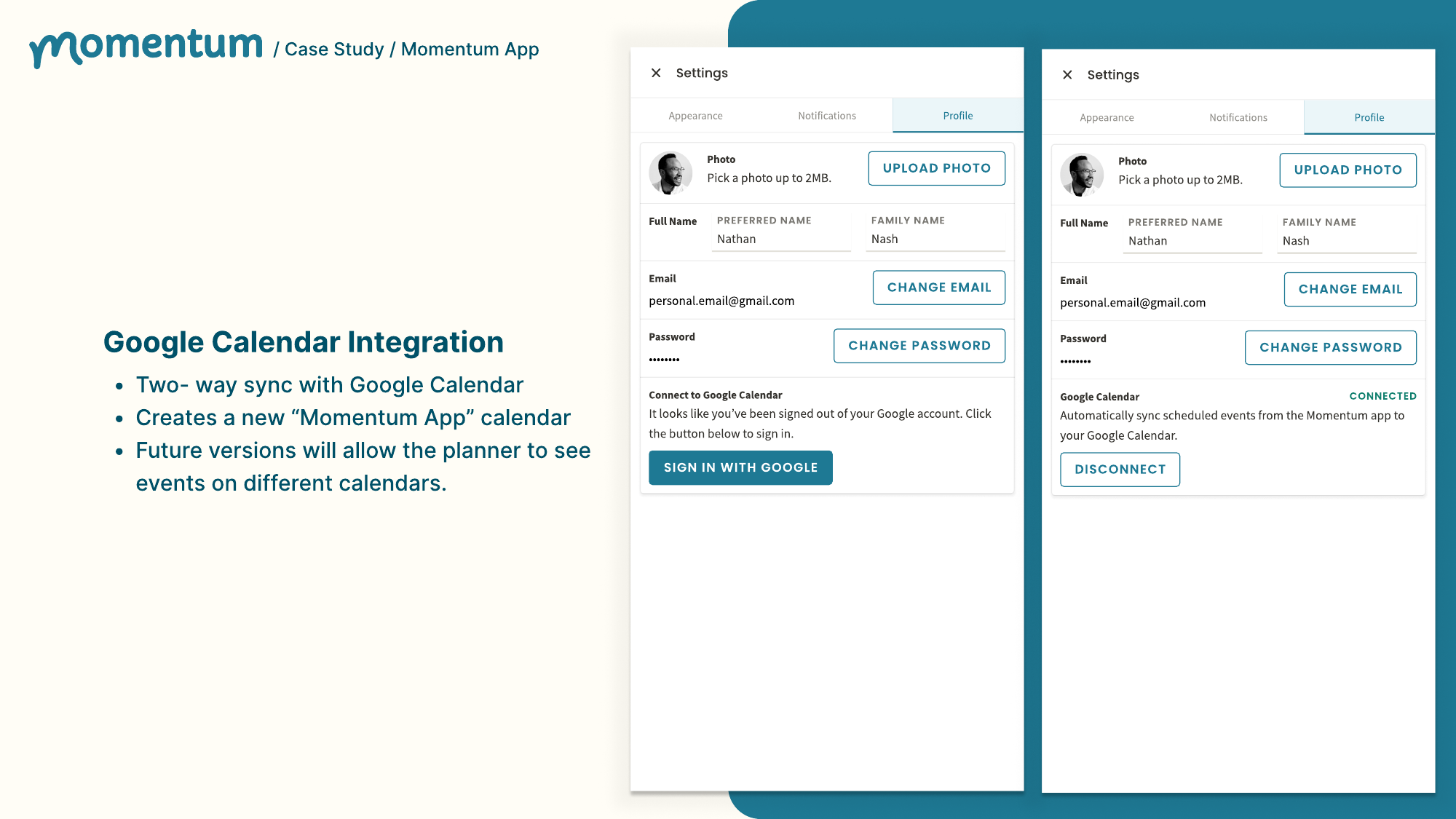
Calendar integration supports the workflow without forcing users to duplicate scheduled events.
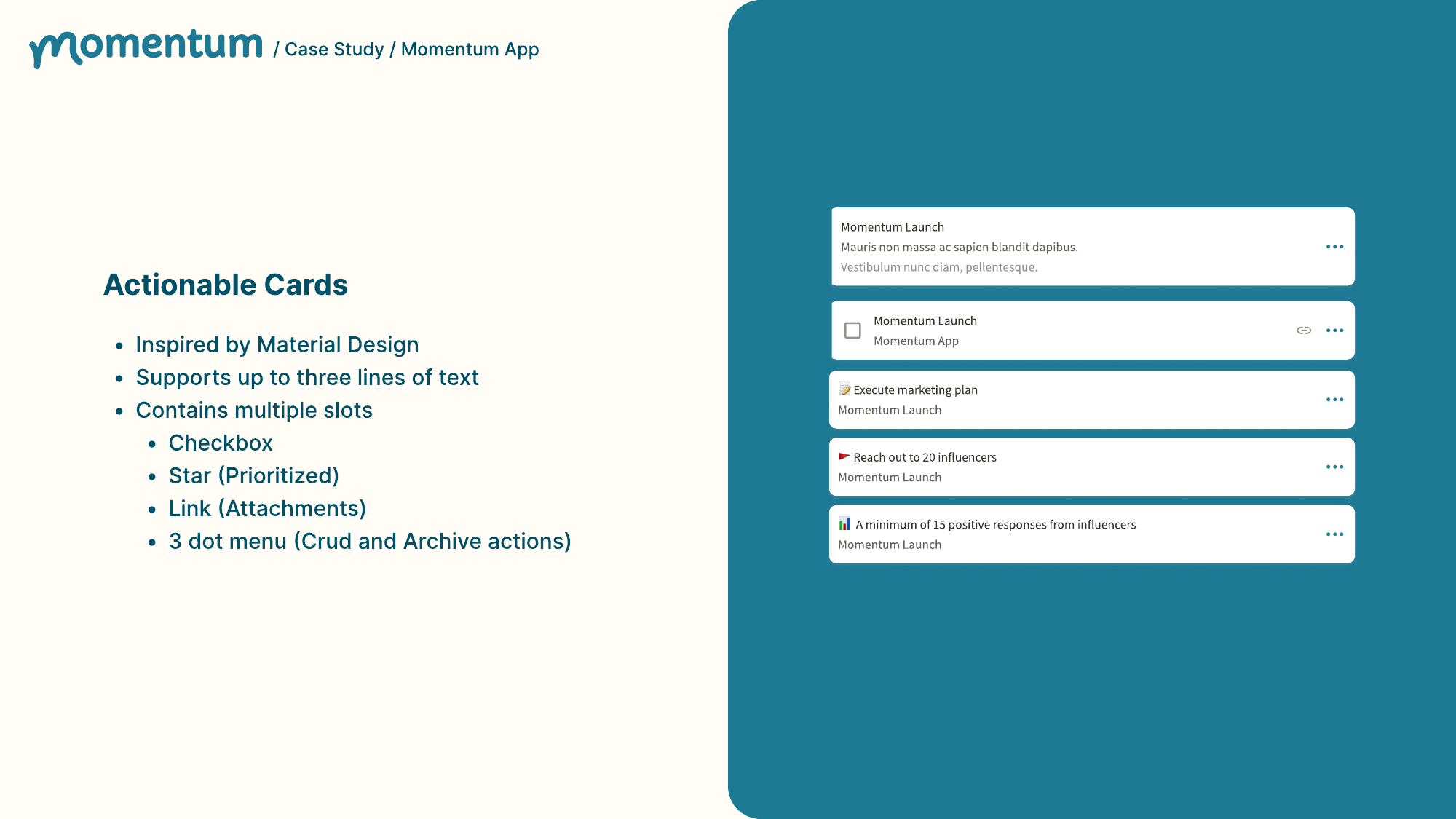
Actionable cards support completion, priority, attachments, CRUD actions, and archiving.
Product System
A shell for clarity and personalization.
Navigation and reusable cards create consistency, while themes and emojis leave room for ownership.
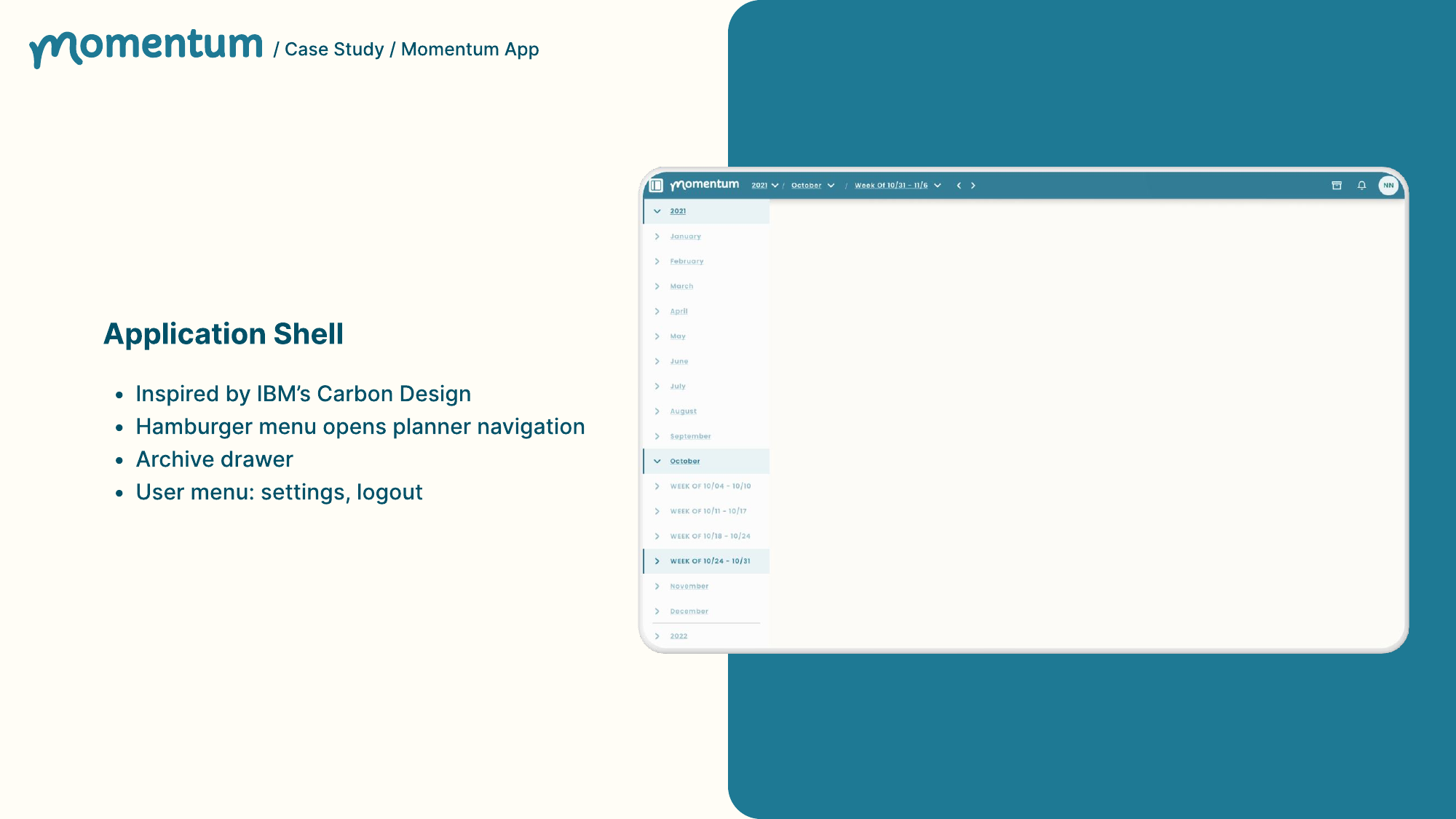
Application shell with planner navigation, archive access, and user controls.
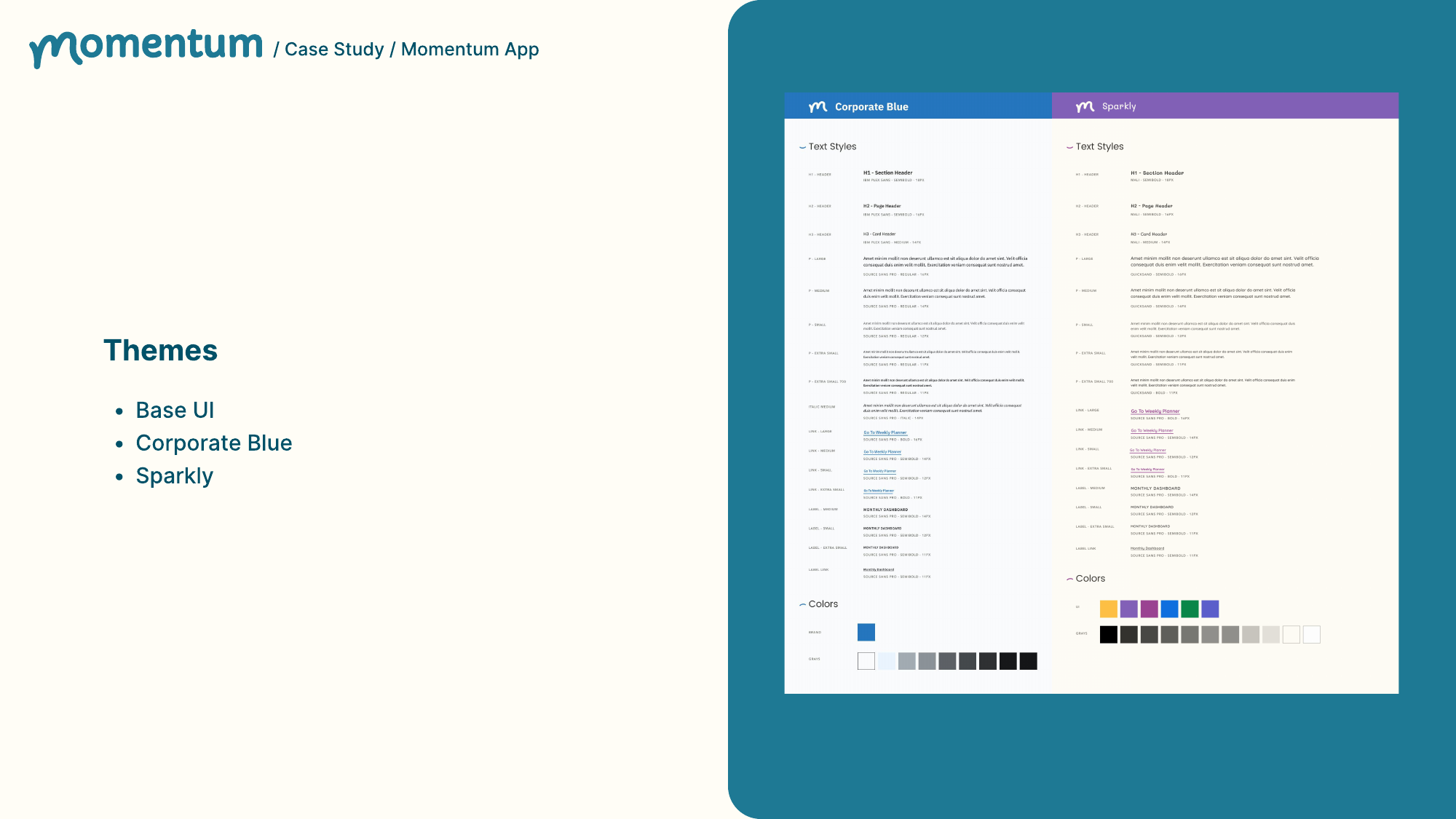
Theme options provide customization without changing the core planning model.
Momentum App was fully funded on Kickstarter in under 24 hours and launched with 500 monthly users